
TikTok Ads for B2B: Spark Ads, Lead Gen, and Creative Testing That Actually Fits a Long Sales Cycle
The question B2B teams should ask first
TikTok Ads for B2B is not a question about whether a platform is fashionable. It is a question about fit. A B2B sale usually involves more than one decision maker, a longer evaluation period, and a buying process that does not finish inside a single video view. TikTok, by contrast, is built for fast scrolling, short attention, and content that earns a reaction in seconds. Those two rhythms can work together, but only if the team is clear about what TikTok is being asked to do.
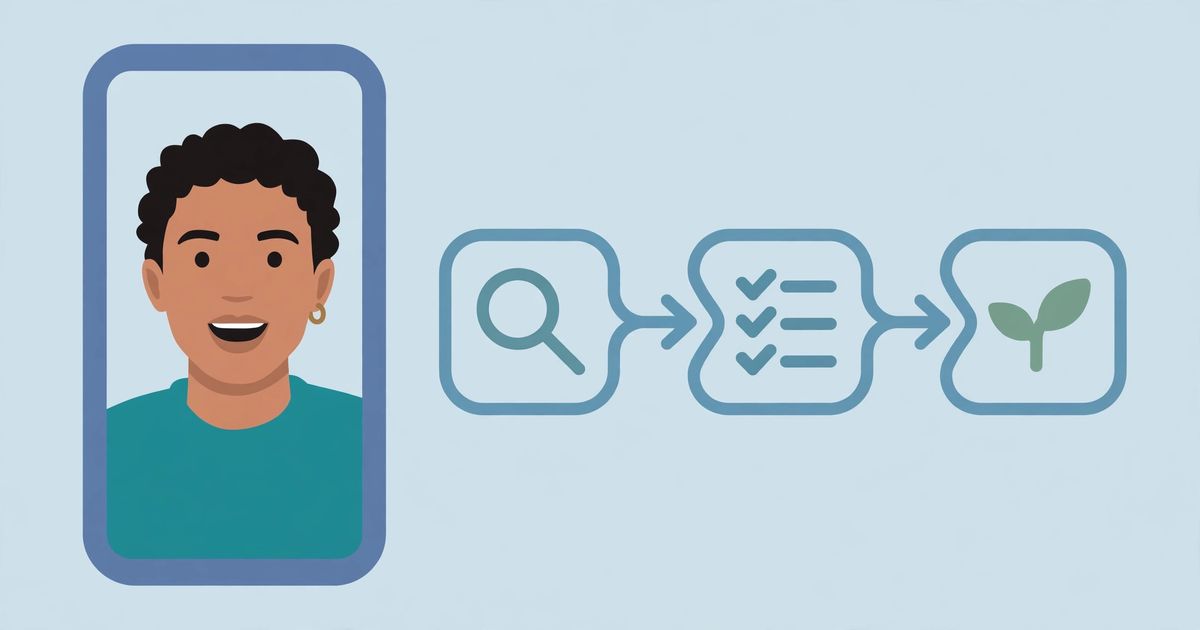
A useful starting point is to separate three different jobs. The first job is to make a problem visible to people who have not yet named it as a buying priority. The second job is to capture a useful next step from someone who is willing to talk, watch, or read more. The third job is to move a known opportunity toward a decision. TikTok is strongest at the first job, workable at the second when the offer and follow-up are designed for it, and weak as a direct closer for a complex sale. Confusing those jobs is where most B2B TikTok tests go wrong. A team that expects a demo booking from a cold viewer in the same session is measuring the wrong outcome, and a team that dismisses the channel because it did not close deals is also measuring the wrong outcome.
This guide explains Spark Ads, the lead generation paths available on TikTok, and a creative testing system that fits a long sales cycle. It also sets out when TikTok fits a B2B funnel and when it does not, so a test can be judged on evidence the team actually collects, rather than on hope or on a single early result.
What Spark Ads actually change
A Spark Ad is an ad format that boosts an existing organic TikTok post, rather than creating a separate ad that only lives inside an ads account. The post keeps its organic identity, its comments, its likes, and its creator attribution, and the ad version points back to that same post. That detail matters more than it first appears.
In a standard In-Feed Ad, the creative is built in the ads manager, reviewed as an ad, and shown to an audience selected by the advertiser. In a Spark Ad, the creative starts life as content that was posted to an account, and the advertiser then applies paid distribution to it. The viewer experience is closer to discovering a post than to being interrupted by a conventional ad unit, because the post can still be found on the account, commented on, and shared in the normal way.
For B2B teams, three practical consequences follow. First, the quality of the organic post becomes the quality of the ad. A post that is vague, overly polished in a corporate style, or written only to impress other marketers will not improve simply because budget is added behind it. Second, social proof travels with the ad. Comments, questions, and criticism are visible, which means a Spark Ad test is also a public conversation test. A team that is not ready to answer questions in comments should not boost a post that invites them. Third, Spark Ads make creator and employee-led content easier to scale. A founder, a practitioner, or a customer-facing team member can post in their own voice, and the team can then put paid reach behind the posts that earn genuine engagement, rather than guessing in advance which polished ad will work.
Spark Ads do not remove the need for targeting, landing pages, tracking, or follow-up. They change the starting point of creative. The question shifts from "what ad should we make" to "what post is already worth putting in front of more of the right people, and what should happen next for someone who engages with it."
Spark Ads compared with a standard In-Feed Ad
| Feature | Spark Ad | Standard In-Feed Ad |
|---|---|---|
| Creative source | An existing organic post on an account | Creative built inside the ads manager |
| Social proof | Likes, comments, and shares stay attached to the original post | Engagement is attached to the ad unit |
| Creator attribution | The posting account and creator remain visible | The advertiser account is the sender |
| Best use in B2B | Testing a voice, a problem framing, or a practitioner perspective | Testing a structured offer, a landing page, or a direct response message |
| Main risk | A weak or confusing organic post gets wider distribution | A polished ad can feel disconnected from the account behind it |
Neither format is universally better. A team that needs tight control over every word, every claim, and every landing page variation may prefer a standard In-Feed Ad for a direct response test. A team that wants to learn which problem framings resonate, and wants that learning to be visible in comments and shares, may prefer Spark Ads for the first phase of testing. Many teams use both, with Spark Ads for discovery and standard ads for retargeting and conversion, but that sequence should be a deliberate choice, not an accident of how the account was set up.
Lead generation on TikTok: three paths, three different promises
TikTok lead generation is often discussed as if it were one thing. In practice, the path a viewer takes after seeing an ad changes what the team owes that person next, and what kind of lead the team should expect.
The first path is a native lead form, often called an Instant Form. The viewer taps, sees a short form inside TikTok, and submits contact details without leaving the app. The advantage is friction. Fewer steps usually mean more submissions from the same amount of attention. The disadvantage is context. A person who submits a form inside a scrolling feed has not visited a website, read a longer explanation, or considered a next step in the same way as a person who clicked through to a landing page. That does not make the lead worthless, but it does make the follow-up more important. The team needs a clear definition of what counts as a valid contact, a routing rule, a response time the team can actually meet, and a way to check whether records arrived complete and without duplicates. A useful discipline here is to audit the form, sync, and feedback loop before scaling a native form, because a low cost per submission can hide a broken handoff.
The second path is a website visit, where the ad sends the viewer to a landing page, a resource, a webinar registration page, or a demo request page. The advantage is control. The team can explain the offer, set expectations, ask only the questions that the next step requires, and measure what happens after the click. The disadvantage is drop-off. Every additional step loses some viewers, and a landing page that was written for search traffic may not match the mindset of a TikTok viewer who arrived from a short video. The landing page for a TikTok test should be written for that arrival: a clear headline that matches the video, a short explanation of the problem, a single next step, and no unrelated navigation that pulls attention away from that step.
The third path is engagement and retargeting, where the first goal is not a form at all. The viewer watches, follows, saves, comments, or visits a profile, and the team later retargets that engaged audience with a more specific offer. This path suits B2B well, because it respects the length of the buying process. It also requires patience and a different measurement approach. The team is not judging the first video by how many demos it booked. It is judging whether the video reached the right kinds of viewers, whether those viewers engaged in a meaningful way, and whether a later, more specific message converts that engaged audience at a better rate than a cold audience.
A test plan should name which path it is using, and why. Mixing all three paths in one campaign, with one budget and one success metric, makes the results hard to interpret. If the team wants to learn about creative, use engagement as the early signal. If the team wants to learn about lead quality, use a single form path and a single follow-up process, and judge it on valid contacts and sales acceptance, not on raw submissions alone.
Creative testing that fits a long sales cycle
Creative testing for B2B on TikTok often fails because it copies a consumer testing playbook. A consumer test can judge a creative by immediate purchases in a short window. A B2B test cannot, because the sale may take weeks or months, involve several people, and depend on conversations that happen outside the ad platform. The testing system therefore needs to separate early signals from late outcomes, and to keep a record of what was actually tested.
Start with one variable at a time. A useful test changes the hook, or the problem framing, or the offer, or the audience, but not all of them at once. If a video changes the hook, the presenter, the length, the caption, and the landing page in the same test, the team will not know which change mattered. A cleaner approach is to hold the offer and the landing page steady while testing hooks, then hold the winning hook steady while testing offers, and so on. That approach is slower in the short term and far more useful in the long term, because the learning compounds.
Test hooks that name a specific problem, not a general category. A hook that says "marketing is hard" tells the viewer nothing about whether the content is for them. A hook that names a concrete situation, such as a sales team chasing leads that never answer, a finance team questioning attribution, or an operations team manually following up on enquiries, gives the right viewer a reason to stop scrolling and gives the wrong viewer a reason to keep scrolling. Both outcomes are useful. A test that attracts everyone and qualifies no one is not a success.
Use the first three seconds for orientation, not for a logo or a company introduction. The viewer needs to know, quickly, who the video is for and what problem it addresses. A founder speaking directly to camera can work, but only if the opening line is specific. A screen recording can work, but only if the first frame shows a recognisable problem, not a dashboard with no context. A text overlay can work, but only if it states the problem in plain language, rather than repeating a slogan.
Test formats as well as messages. Short problem-first videos, practitioner walkthroughs, myth-and-correction videos, and comparison videos that explain when a tool or approach is not the right fit can all work in B2B, but they work for different reasons. A problem-first video earns attention. A walkthrough earns trust by showing how something actually works. A myth-and-correction video earns attention by challenging a common assumption, but it must be accurate and fair, or it will damage credibility. A comparison video earns attention from viewers who are already evaluating options, but it should be honest about trade-offs, not a disguised sales pitch.
Keep a creative log. For each video, record the hook, the problem named, the format, the presenter style, the call to action, the landing page or form used, the audience, and the dates it ran. Without that log, a team will repeat tests it has already run, forget which hook was tested against which offer, and mistake a change in audience for a change in creative quality. The log is not bureaucracy. It is the only way a long-cycle test stays interpretable over time.
Judge early results by the right early metric. For a discovery video, useful early signals include whether the right audience watched past the opening, whether viewers commented with relevant questions, and whether profile visits or follows came from viewers who match the intended audience. For a lead form video, useful early signals include form completion, valid contact rate, and whether the CRM received complete records. For a landing page video, useful early signals include click-through to the page, time on the page, and completion of the single next step. None of those early signals prove pipeline on their own. They are checkpoints that tell the team whether to continue, adjust, or stop a test before spending more budget on a weak foundation.
Audience and targeting: what TikTok can and cannot do for B2B
TikTok targeting is built around interests, behaviours, video interactions, and broad demographic signals, rather than the job-title and company targeting that B2B teams expect from LinkedIn. That difference is not a flaw in TikTok. It is a design choice that shapes how B2B teams should use it.
A B2B team cannot reliably target only senior decision makers at companies of a certain size through TikTok interest targeting alone. It can target people who engage with certain kinds of business, technology, finance, or operations content, and it can build audiences from website visitors, video viewers, and customer lists where the platform supports those options and where privacy rules allow them. It can also use Spark Ads from a credible account to reach people who already follow related topics, and then use engagement to narrow the audience over time.
That limitation has a practical consequence. TikTok is a poor tool for account-based targeting on its own. If the entire strategy depends on reaching a named list of companies and only those companies, TikTok should not be the primary channel. If the strategy depends on reaching a wider set of practitioners, managers, and founders who share a problem, and then qualifying them through content, forms, and follow-up, TikTok can be a useful discovery layer.
Audience testing should therefore start broad enough to learn, and narrow only on evidence. A team that starts with an extremely narrow audience, a small budget, and a complex offer will learn very little, because the test will not generate enough meaningful engagement to interpret. A team that starts broad, watches who actually engages, and then builds retargeting audiences from that engagement will learn who the content resonates with, even if that audience is not identical to the initial assumption. The hypothesis to test is not "our assumed audience is correct." The hypothesis is "this problem framing attracts viewers who match our buyer profile, and we can identify them through engagement and follow-up."
When TikTok fits a B2B funnel, and when it does not
TikTok fits best when the buying problem can be explained in a short, concrete way, when the audience is active on the platform in a professional or learning mindset at least some of the time, and when the team has a follow-up system that can handle a longer nurture period. It fits when the offer at the top of the funnel is genuinely useful on its own, such as a clear framework, a diagnostic, a comparison, or a walkthrough, rather than a disguised demo request. It fits when the team can answer comments, respond to enquiries promptly, and keep the conversation going after the first touch.
TikTok fits less well when the sale depends on a highly technical evaluation that cannot be introduced in a short video, when the buyer must be reached only through a named account list, when the team has no capacity for follow-up, or when the offer requires a long, detailed explanation before any next step makes sense. It also fits less well when the team judges success only by immediate demo bookings from cold traffic. That judgement will almost always make TikTok look like a failure, even if the channel is doing useful discovery work that a later channel converts.
| Situation | TikTok is a reasonable test | TikTok is probably not the first test |
|---|---|---|
| Problem can be named in one sentence | Yes, test a problem-first video | No, if the problem needs a long technical setup |
| Buyer is a practitioner or founder who learns from short video | Yes, especially with Spark Ads from a credible voice | No, if the only buyer is a closed procurement committee |
| Follow-up and nurture exist | Yes, engagement can feed retargeting and email nurture | No, if no one can respond or follow up |
| Goal is discovery and qualification over time | Yes, judge early signals, then qualified outcomes | No, if the goal is only immediate closed deals from cold traffic |
| Budget is small and the test must prove pipeline quickly | Test with caution, and set a narrow learning goal | No, a high-intent search or direct outreach test may be more interpretable |
A team that is unsure should run a small, bounded test with a learning goal, not a pipeline goal. For example, the learning goal could be to find which of three problem framings earns relevant comments and profile visits from the intended audience, and whether a retargeted audience from that engagement completes a resource download at a better rate than a cold audience. That test produces a decision. A test that simply asks "does TikTok work for B2B" produces an argument, because the question is too broad to answer with one campaign.
Measurement without fooling yourself
Measurement is where B2B TikTok tests most often go wrong, because platform metrics and business outcomes measure different things. A video can have strong platform metrics and weak business outcomes, or weak platform metrics and useful business outcomes, depending on who watched it and what happened next.
Separate the measurement into three layers. The first layer is platform engagement: views, watch time, comments, shares, profile visits, and follows. This layer tells the team whether the creative earned attention from the intended kind of viewer. The second layer is lead and handoff quality: form submissions, valid contact rate, CRM delivery rate, duplicate rate, and sales acceptance. This layer tells the team whether the attention turned into a usable next step. The third layer is pipeline and revenue, measured over a period that matches the sales cycle, with a clear cohort definition. This layer tells the team whether the channel contributed to real outcomes, but it cannot be judged in the first days of a test.
Do not compare TikTok results directly with search results using the same metric. Search captures people who are already looking for a solution. TikTok reaches people who were not searching at that moment. Comparing their cost per lead as if they were the same kind of lead will mislead the team. A more useful comparison is to look at how different channels compare on cost per lead and time to first meeting, and then to judge TikTok on the stage it is actually playing. That kind of cross-channel comparison is the subject of how different channels compare on cost per lead and time to first meeting, and it is a reminder that a channel that looks expensive at the lead stage can still be useful at the discovery stage, and vice versa.
CRM feedback is essential. If the team sends TikTok leads into the same CRM queue as search leads, with no source tag, no stage definition, and no feedback from sales, the team will never know whether TikTok leads were good, bad, or simply handled differently. Tag the source, record the form or landing page used, record the date of first response, and record the sales acceptance decision with a reason. That feedback loop is what turns a creative test into a funnel test. It is also the same discipline that matters when a platform change touches integrations. When a platform change touches CRM integrations, a compatibility review for custom CRM and ad integrations is a useful model for checking that events, fields, and syncs still behave as expected before scaling a test.
Hypothesis: a TikTok discovery layer followed by retargeting and a clear nurture sequence will produce a higher share of sales-accepted contacts than a cold direct-response test alone, because the first touch qualifies interest before asking for a meeting. That is a hypothesis, not a result. It should be tested by running both paths with the same offer, the same follow-up process, and the same sales acceptance definition, and by comparing valid contacts and accepted opportunities, not just submissions or clicks.
Common mistakes to avoid
The first mistake is boosting a post that was never designed to be an ad. A post that works organically because friends and followers already trust the account may confuse a cold audience that has no context. Before boosting, check that the post stands alone: a new viewer should understand who it is for, what problem it addresses, and what to do next, without needing to know the account.
The second mistake is asking for too much, too soon. A cold TikTok viewer who has just watched a short video is unlikely to book a demo, complete a long form, or read a detailed proposal in the same session. Ask for a smaller next step that matches the level of trust earned so far, such as a useful resource, a short diagnostic, or a follow for more content on the same problem. A demo request can come later, after retargeting and nurture, when the viewer has shown further interest.
The third mistake is treating comments as noise. On TikTok, comments are part of the creative. A thoughtful answer to a relevant question can earn more trust than another ad. A defensive or generic answer can damage trust just as quickly. Assign comment responses to someone who understands the product and the audience, and set a response window the team can actually meet. Do not boost a post that invites questions the team cannot answer.
The fourth mistake is changing the test too quickly. A B2B test needs enough time and enough meaningful engagement to interpret, and it needs a stable offer and landing page during the test period. Changing the hook, the audience, the budget, and the landing page every few days creates noise, not learning. Set a test period in advance, define the decision rule before the test starts, and only change a variable when the log shows what was tested and what the result was.
The fifth mistake is judging a discovery channel by a closing metric alone. If TikTok is used for discovery, judge it first on discovery: did it reach the right kind of viewer, did that viewer engage in a relevant way, and did retargeting convert that engaged audience better than a cold audience. If it is used for direct lead generation, judge it on valid contacts and sales acceptance, not on raw submissions. Mixing those judgements in one report will make a useful test look like a failure, or a weak test look like a success.
A practical launch checklist
Before launching a B2B TikTok test, work through this checklist in order. If any item is missing, fix it before spending budget, because the missing item will distort the test result.
- Define the single problem the test will address, in one sentence, and the audience who has that problem.
- Choose one path for this test: native form, website visit, or engagement and retargeting. Name the next step the viewer is being asked to take.
- Write the landing page or form for a TikTok arrival, not for a search arrival. Match the headline to the video, and ask only for the information the next step requires.
- Define what counts as a valid contact and what counts as sales acceptance, and agree those definitions with sales before launch.
- Set up CRM tagging, routing, duplicate handling, and a response time the team can meet.
- Prepare three hooks on the same problem, holding the offer and landing page steady, and log each creative fully.
- Plan comment responses, including who answers, what questions should be escalated, and what should not be promised in a comment.
- Define the decision rule in advance: what early signal would justify continuing, what signal would justify changing the hook, and what signal would justify stopping the test.
- Run the test for the period defined in advance, review the creative log, the handoff quality, and the retargeting results together, and only then decide whether to scale, adjust, or stop.
Balancing brand and demand is a related discipline on other interruption channels, and the thinking behind balancing brand and demand on another interruption channel is useful here as well. TikTok discovery content builds familiarity and problem awareness, while retargeting and direct response content convert that familiarity into a next step. Treating those two jobs as one campaign, with one metric, will hide the contribution of each.
The decision to make
TikTok Ads for B2B is not a yes or no question. It is a fit question, a creative question, and a follow-up question, in that order. If the problem can be named clearly, if the team can create content that earns attention from the right kind of viewer, and if the team can follow up and nurture that attention over a realistic sales cycle, TikTok can be a useful discovery and qualification layer. If the team needs immediate closed deals from cold traffic, needs to target only named accounts, or has no follow-up capacity, TikTok is unlikely to be the first test to run.
Run a bounded test, keep one variable steady at a time, log what was actually tested, and judge the test on the stage it was designed to play. That approach will not make TikTok work for every B2B business, but it will give the team a clear, honest answer for their own business, and a set of learnings that can be reused even if the channel itself is paused.
Need help with performance marketing?
Our team builds performance marketing systems for B2B companies. Get a free strategy review.
Book a Free Strategy CallFrequently Asked Questions
How This Fits Into Our Work
This article is part of how we deliver paid-acquisition and lead-generation for teams in saas. If you're facing similar challenges, we can help you build the infrastructure to address them systematically.