
Email Authentication for B2B: SPF, DKIM, DMARC & BIMI Setup Guide
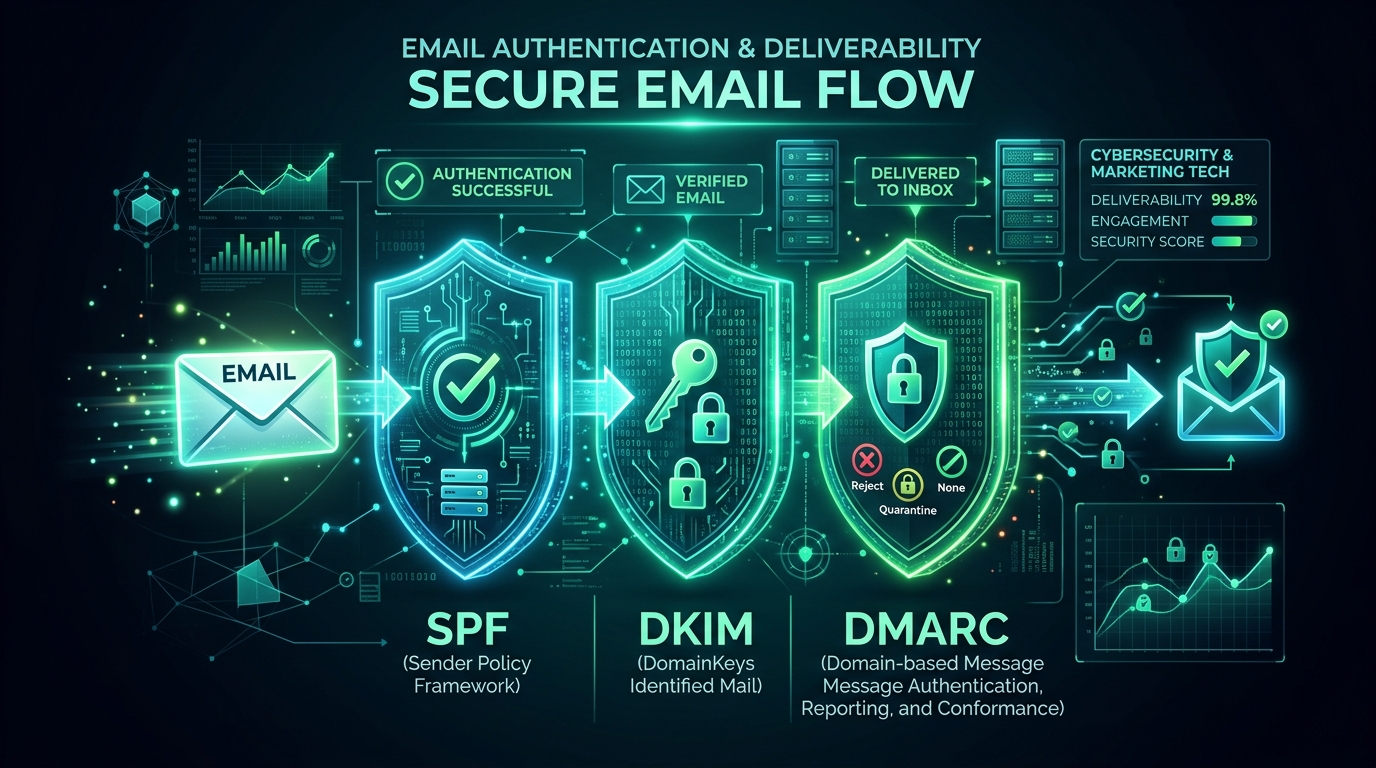
Forget the spam folder. If your email authentication is a mess, your emails aren't even getting delivered to the junk bin—they're being flat-out rejected with a 550 error.
At Sotros, we've seen a massive shift in how major inbox providers operate. Deliverability isn't a marketing tactic anymore; it's your baseline technical operating system.
When you're running a cold email campaign in 2026, or trying to execute a complex lead nurturing workflow, nothing derails revenue faster than an unauthenticated sending domain. Google, Yahoo, and Microsoft have completely stopped messing around. Let's break down the exact technical setup you need to survive.
The New Reality: Rejection, Not Spam
What most guides say: "Good authentication keeps you out of the spam folder." What we actually see: If you aren't authenticated, you get bounced. Period.
AI-driven filtering algorithms at major providers now prioritize engagement patterns over legacy IP-based scoring, but you don't even get to the engagement phase if your fundamental authentication is broken. To dig deeper into how these providers look at spam, you can review the Google Workspace Admin guide on email authentication. You can also look at Return Path's deliverability index for deeper metrics on IP scoring versus engagement, as well as Microsoft's anti-spam guidelines and Meta Business Help to see how cross-platform identity verification ties back to root domain trust.
SPF, DKIM, and DMARC: The Non-Negotiable Trio
Here's a breakdown of the core protocols you absolutely must implement.
SPF (Sender Policy Framework)
SPF acts as the guest list for your domain. It explicitly lists which mail servers (IP addresses) are authorized to send email on your behalf. If a server isn't on the list, the bouncer (the receiving mail server) kicks the email out. You set this up via a TXT record in your DNS settings. Ensure you aren't exceeding the 10 DNS lookup limit, a common misstep we fix constantly.
DKIM (DomainKeys Identified Mail)
While SPF checks who is sending the email, DKIM ensures the message hasn't been tampered with in transit. It adds a cryptographic signature to your emails. The receiving server uses your public key (published in DNS) to verify the signature.
When you're scaling AI email personalization, ensuring every single message is properly signed is critical—a broken signature means your beautifully personalized email is dead on arrival.
DMARC (Domain-based Message Authentication, Reporting, and Conformance)
DMARC ties SPF and DKIM together. It dictates what the receiving server should do if an email fails authentication.
Here's a hot take: p=none is effectively useless in 2026.
You must be at enforcement—meaning your policy is set to p=quarantine or p=reject. Furthermore, your SPF and DKIM domains must align with the From address in your emails. If you're using various marketing automation platforms, make sure they all align with your root domain.
For authoritative guidelines on DMARC policies, DMARC.org is the definitive resource.
BIMI: Verified Logos and Trust at Scale
BIMI (Brand Indicators for Message Identification) is the holy grail of modern email marketing. It allows you to display a verified, trademarked brand logo directly next to your message in the recipient's inbox.
But there's a catch. To implement BIMI, you need:
- DMARC strictly at enforcement (
p=quarantineorp=reject). - A Verified Mark Certificate (VMC) from an authorized certificate authority.
BIMI drastically increases open rates and brand trust. It proves you aren't a fly-by-night operation. For technical deployment steps, check the BIMI Group's official documentation.
The Technical Operating System Checklist
After managing 50+ accounts, we've formalized this process. Don't skip these steps:
- Implement RFC 8058: One-click unsubscribe is now a hard standard requirement. If you make people log in to unsubscribe, you will be penalized.
- Monitor RUA and RUF Reports: Set up weekly monitoring for your DMARC aggregate (RUA) and forensic (RUF) reports. Tools like Postmark or Dmarcian are essential here.
- Strict List Hygiene: Verify all emails before sending and ensure you have permission-based contacts.
- The 6-Week Warmup: For new domains or IPs, execute a strict 6-week warmup schedule. Ramp volume slowly. We often pair this with our SaaS onboarding email sequences to ensure high initial engagement from real users.
Action Items
Don't wait for your open rates to crash to zero.
- Audit your DNS records immediately.
- Move DMARC to
p=reject. - Apply for your VMC.
If you need a team that treats deliverability like the hard computer science it is, rather than just "guessing and testing," reach out to us at Sotros.
Need help with email & nurture?
Our team builds email & nurture systems for B2B companies. Get a free strategy review.
Book a Free Strategy CallFrequently Asked Questions
How This Fits Into Our Work
This article is part of how we deliver Email Marketing, Marketing Automation and Digital Strategy for teams in B2B and SaaS. If you're facing similar challenges, we can help you build the infrastructure to address them systematically.